AutoCAD plug-in · Beta

ACAD Layer Standardizer

A layer translator with a memory. Map messy, inconsistent drawing layers onto an established layer standard — and let it learn your conventions as you go.

Download latest release Version Beta-1.0 — Released 7/16/2026
View on GitHub
AutoCAD 2021–2027 BETA Free & Open Source
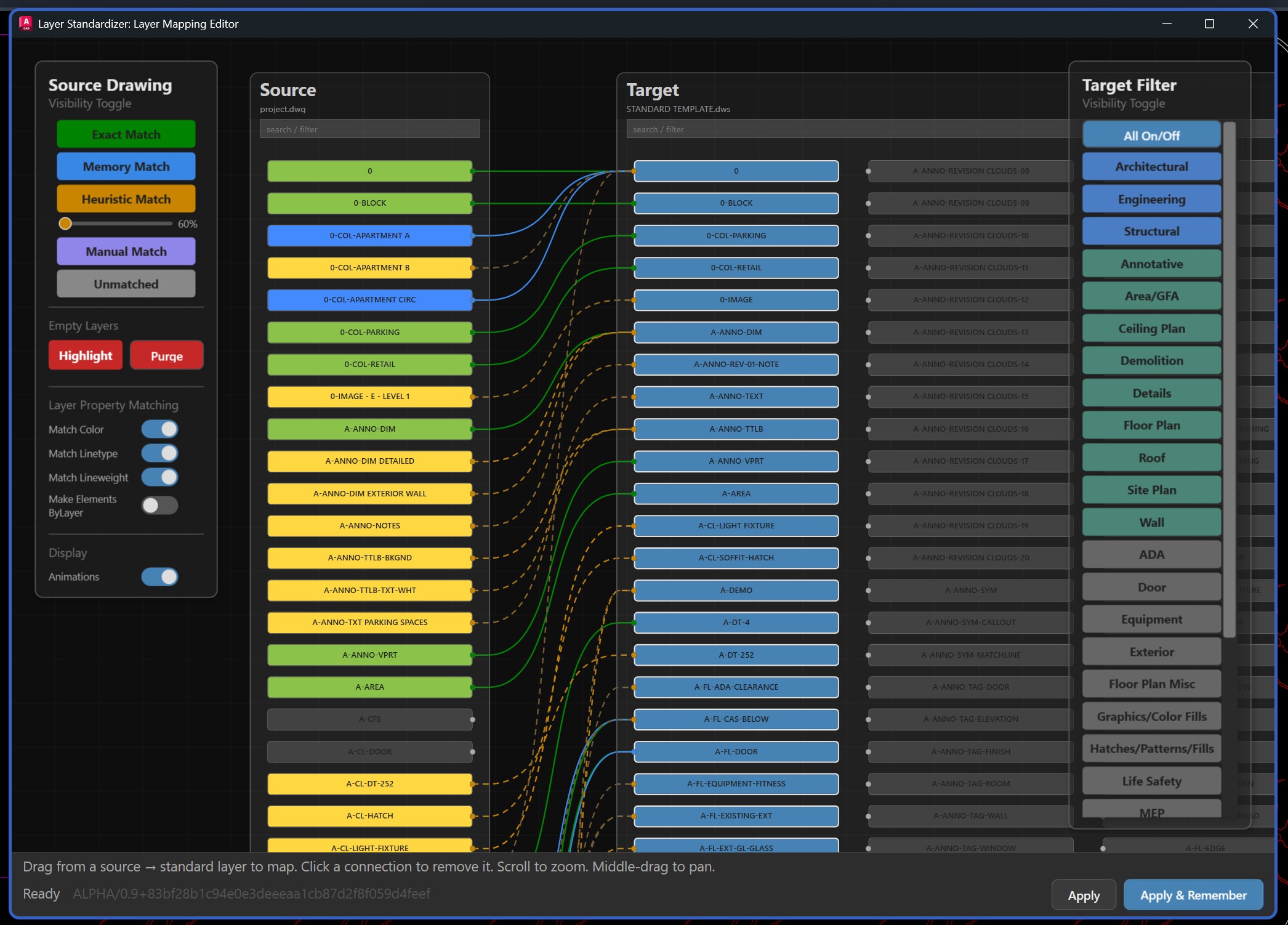
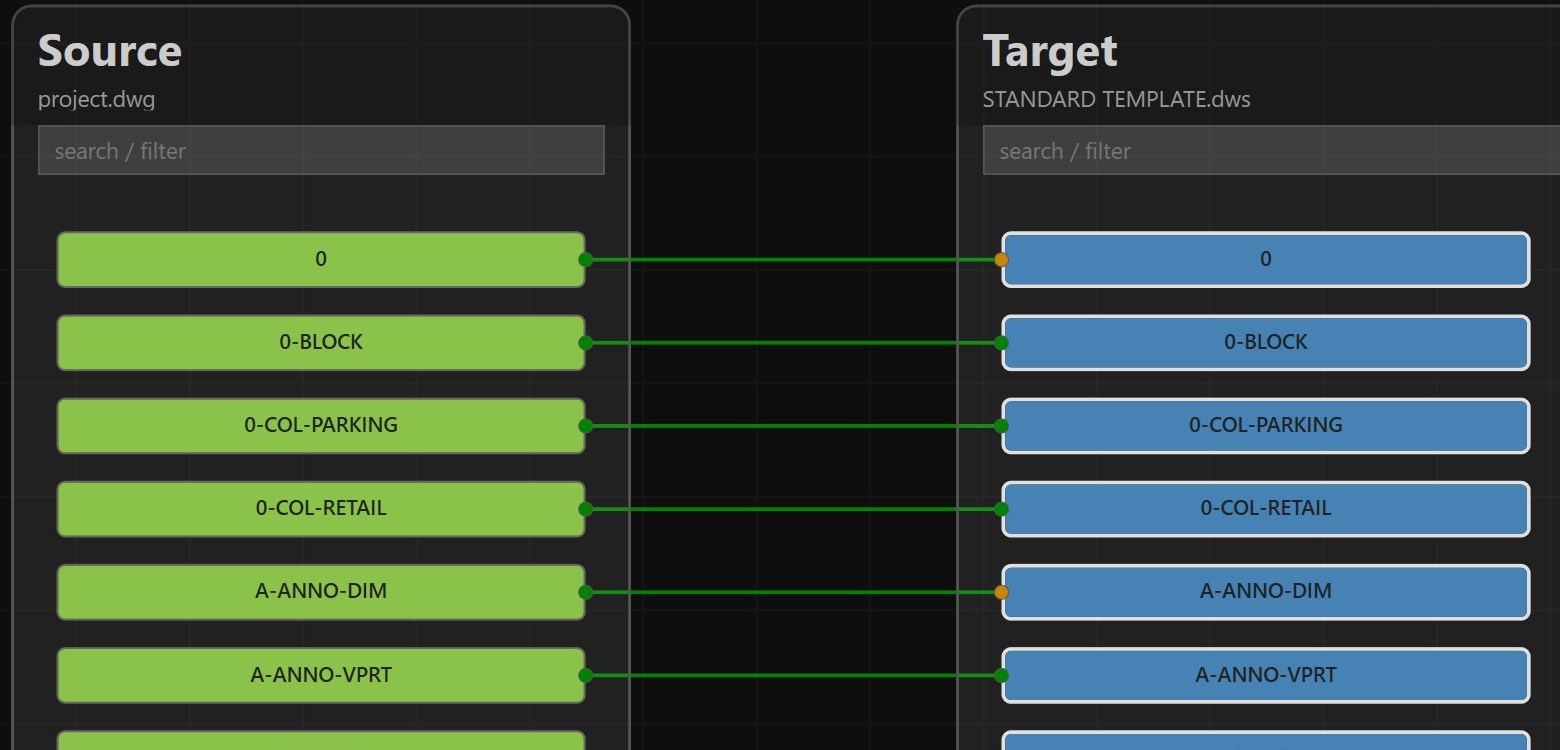
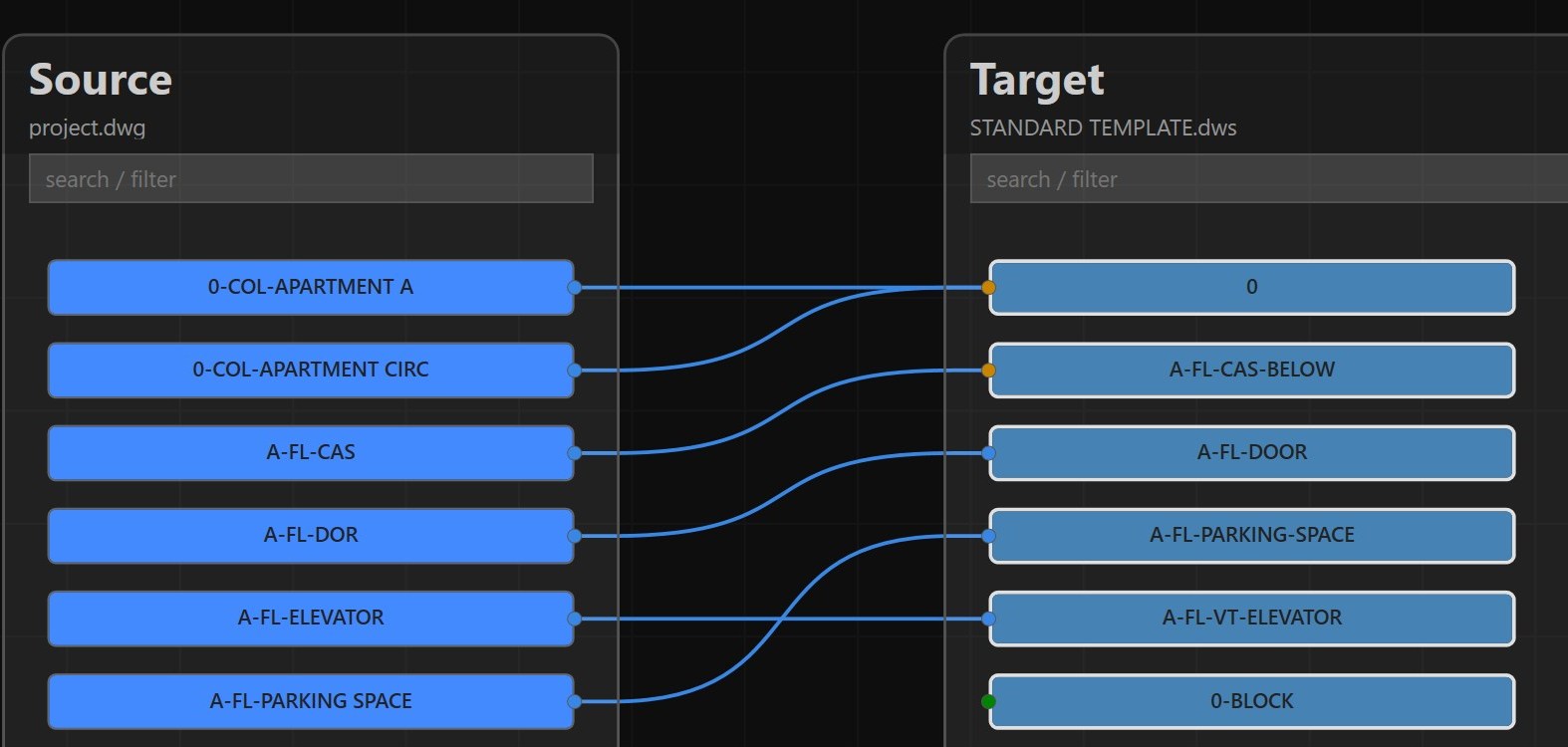
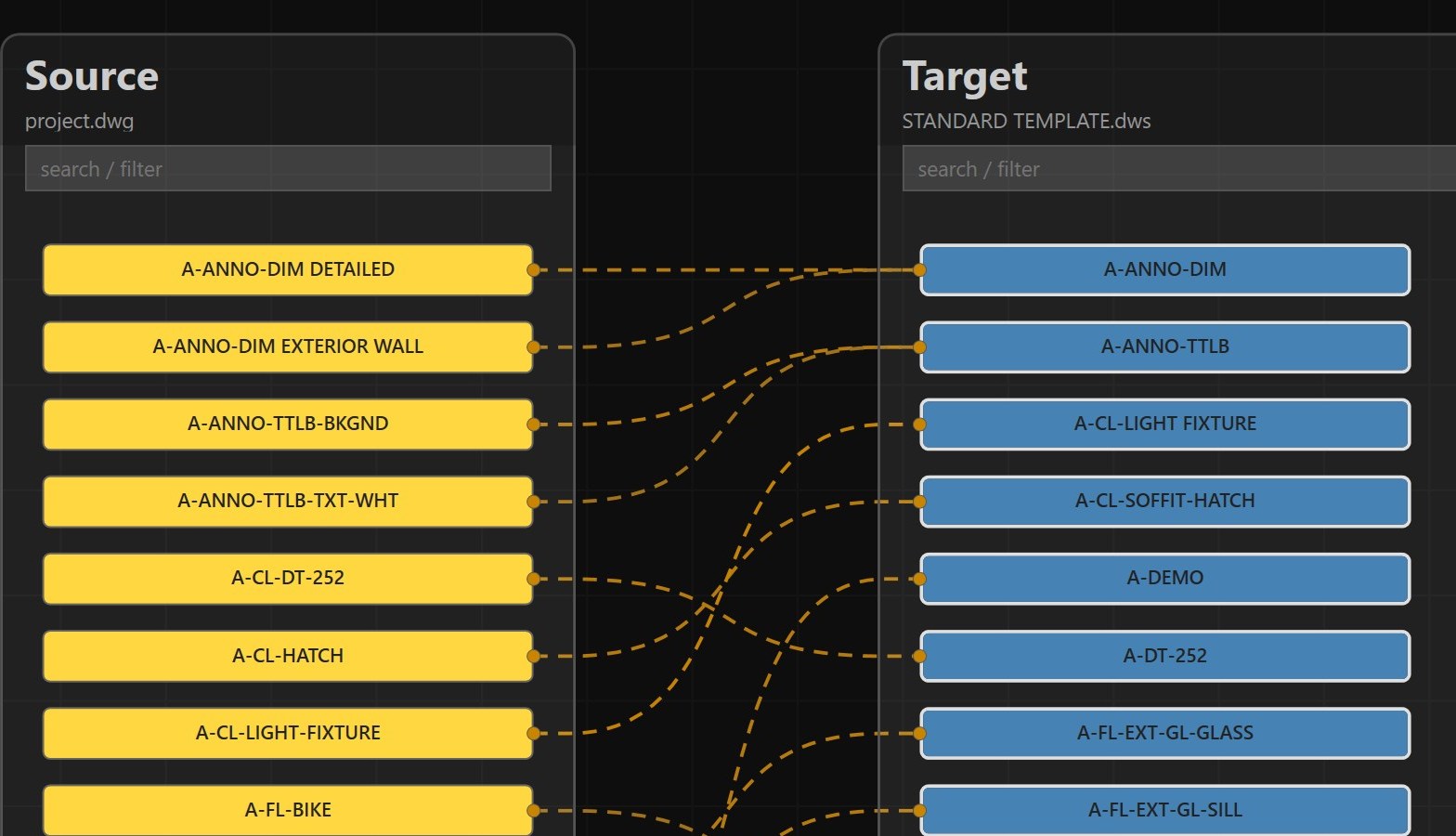
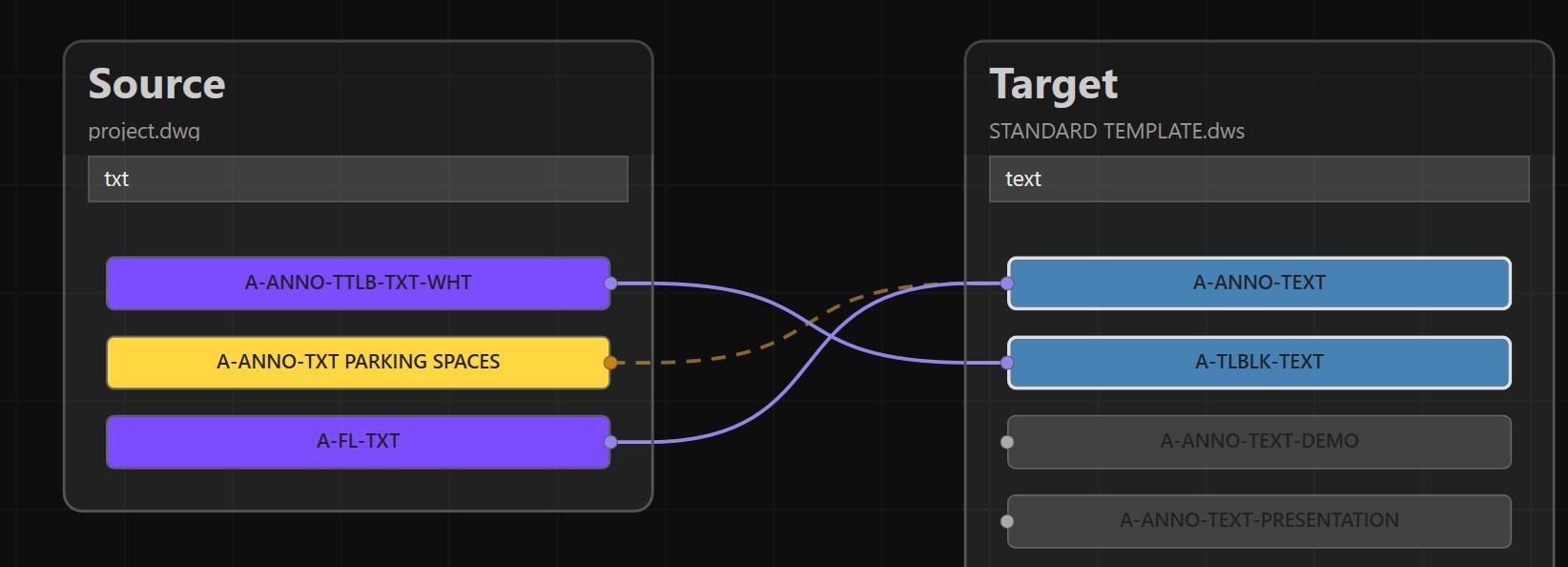
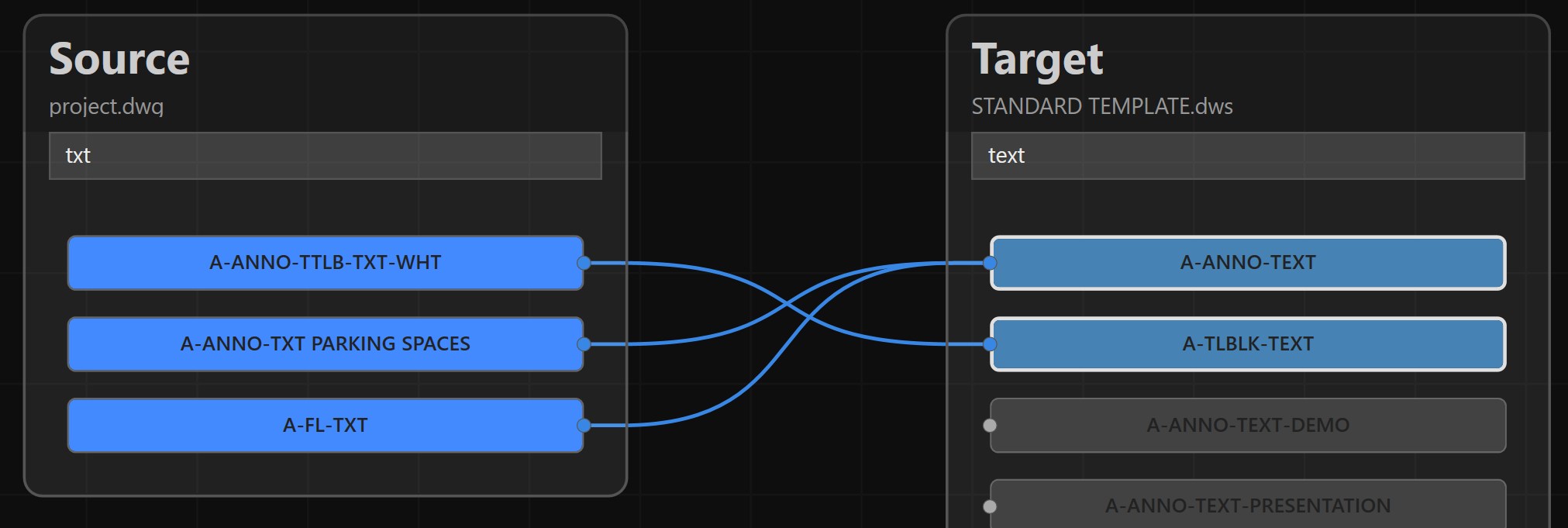
Green = exact match, blue = memory match, amber (dashed) = heuristic suggestion, purple = manual match.

What it does

Point it at a drawing and it reads every layer in use, then helps you map each one to your standard naming scheme — remembering past decisions and suggesting matches for layers it has never seen before, based on pattern matching against layers it has.

App Details

A walkthrough of the workflow, straight from the current build. Click any image to zoom in.

Getting started

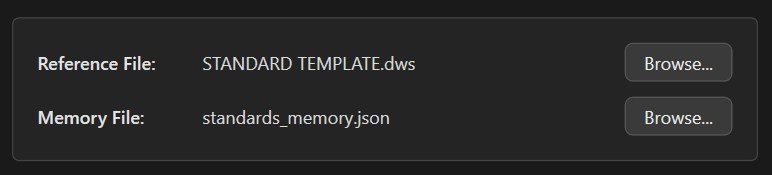
Layer Standardizer launch dialog with reference file and memory file pickers
Launch: set your reference standard and memory file
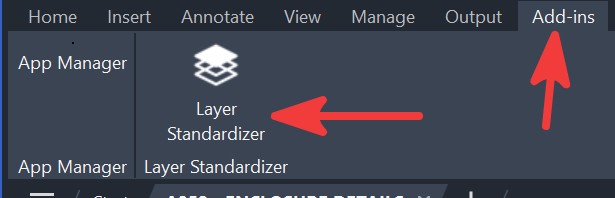
AutoCAD ribbon showing the Layer Standardizer add-in tab
Docks into the AutoCAD ribbon as its own add-in
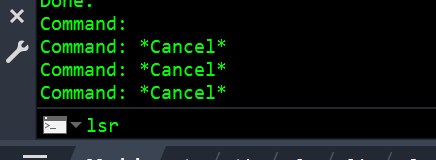
AutoCAD command line with the LSR command typed
Or launch from the command line with LSR

How matches are made

Editor view showing green exact-match connections between identically named layers
Exact matches connect automatically
Editor view showing blue memory-match connections recalled from prior sessions
Memory matches recall past mapping decisions
Editor view showing amber dashed heuristic-match suggestions
Heuristic suggestions, gated by a confidence slider
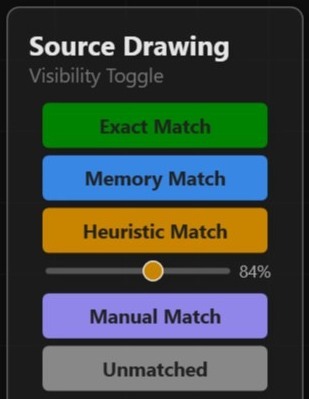
Heuristic Match toggle with an 84% confidence slider
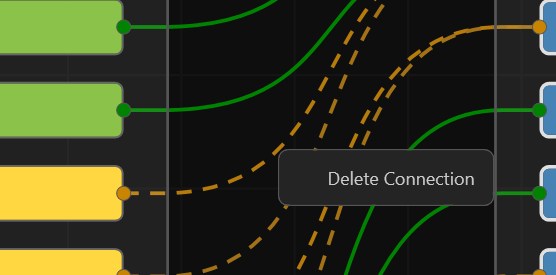
Delete Connection tooltip shown when clicking a match line
Any connection can be unlinked by clicking on the link, right clicking, and with undo/redo (Ctrl-Z, Ctrl-Y)

Teaching it your standard

Filtering & cleanup

Filtering Layers

Navigating the app with hundreds of visible layers can be a pain, so there are several ways to filter the list to just what you're looking for.

Source Drawing panel with visibility toggles for Exact, Memory, Heuristic, Manual, and Unmatched layers
The "Source" side lets you choose which kind of match you want to review
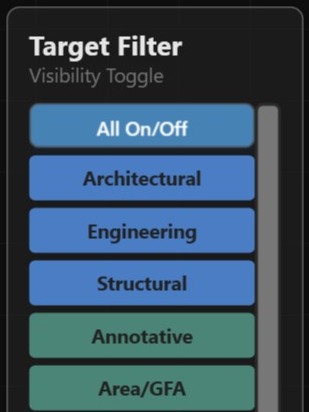
Target Filter panel with discipline and category visibility toggles
The "Target" side lets you filter to specific layer groups and types
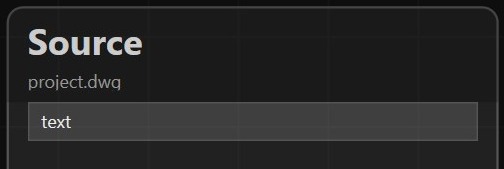
Source search box filtered to the text 'text'
You can also filter by typing partial names

Cleaning Up

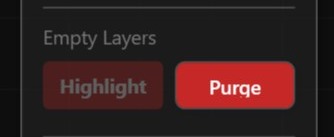
Empty Layers panel with Highlight and Purge buttons
Identifying and purging out empty layers is easy

Layer Standard Application

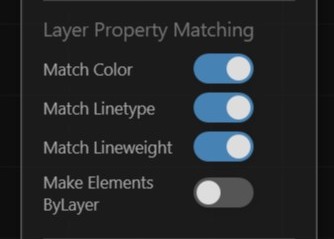
Layer Property Matching panel with Match Color, Match Linetype, Match Lineweight, and Make Elements ByLayer toggles
You can choose to just correct layer names or apply standards more deeply

Basic usage

A first pass at cleaning up a drawing's layers looks like this:

  1. Install

    Run the installer — it detects your AutoCAD version(s) and deploys the matching build automatically via the Autoloader.

  2. Open the drawing

    With the drawing open in AutoCAD, launch the Layer Standardizer from the ribbon or type its command to open the mapping editor.

  3. Review suggested matches

    The tool compares existing layers against your standard and pre-fills high-confidence matches, flagged with a confidence score.

  4. Map the rest

    Connect any remaining layers by hand in the node graph, or use the filter panel to focus on unmapped layers only.

  5. Standardize

    Run the standardize command to apply the mapping — renaming and consolidating layers to match your standard.

  6. Reuse the memory

    The mapping decisions you made are remembered, so the next drawing you clean up gets smarter suggestions automatically.

Supported AutoCAD versions

One installer covers all supported releases — it ships a build for each AutoCAD .NET compatibility era and AutoCAD automatically loads the right one.

AutoCAD releaseRuntime
2021 – 2024.NET Framework 4.8
2025 – 2026.NET 8
2027.NET 10

Includes AutoCAD verticals (Civil 3D, Map 3D, Plant 3D). AutoCAD 2020 and older are not supported.

Why this exists

This is a personal project — I built it to solve my own layer-cleanup headaches, not as a commercial product. It's free to use, and I'm happy to share it with any other AutoCAD user who's dealt with the same problem.

If you try it and hit a bug, have an idea for a feature, or just want to say what did or didn't work for you, I'd genuinely like to hear about it.

yiannias@gmail.com